
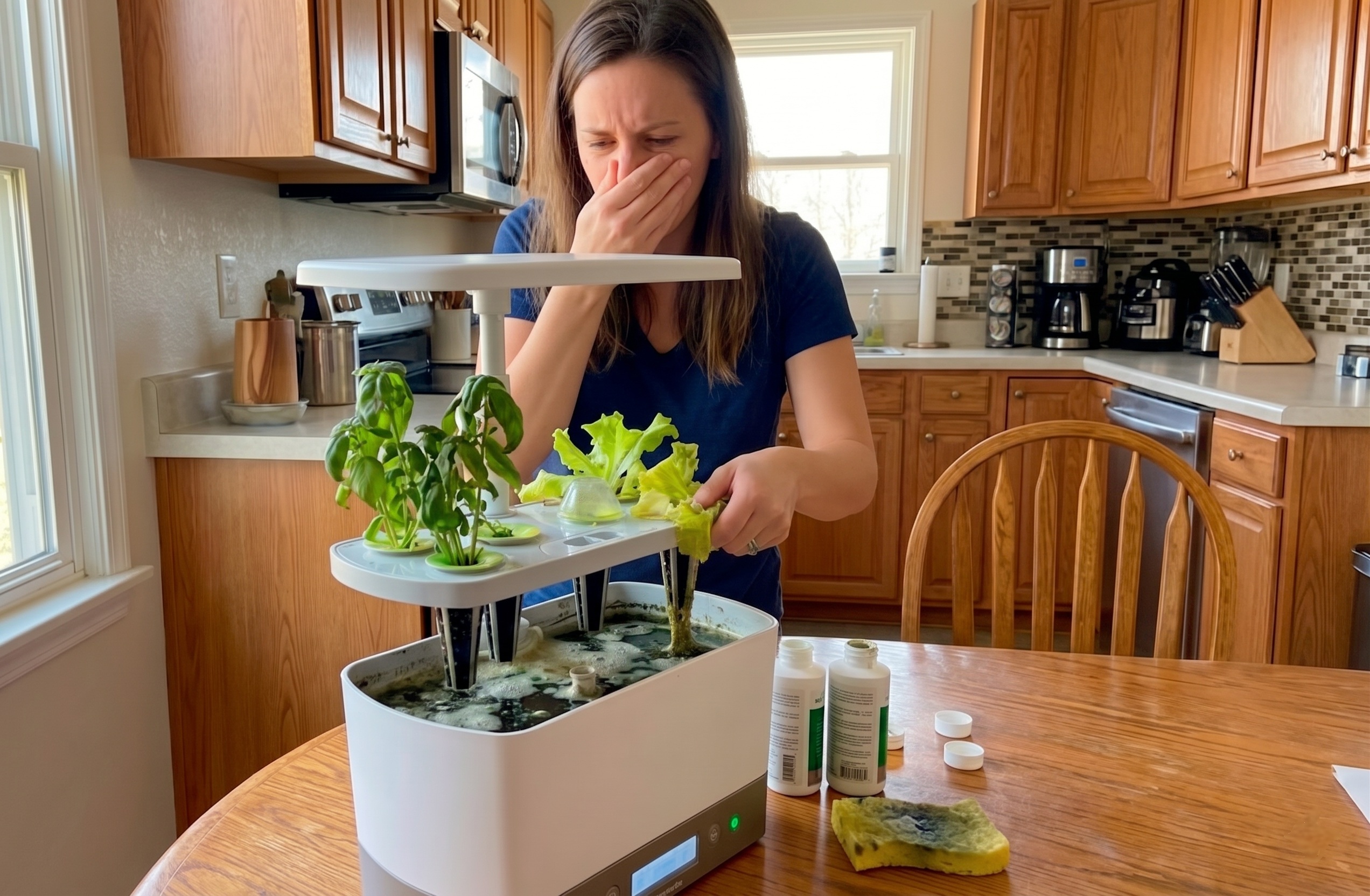
Opening your SmartGarden’s reservoir and noticing a strange smell is a clear warning sign. While it’s normal for the nutrient solution to have a faint earthy or mineral scent, it should never smell fermented, like rotten eggs, or like stagnant water.
These odors are usually the first indicator that bacteria are proliferating, oxygen levels are low, or root problems are developing. The good news is that prevention is much easier than fixing the problem after the fact.
Note: This article includes AI-generated images and illustrations to enhance your reading experience.
Why does bad smell appear?
Bad odor doesn’t come out of nowhere — there are usually very specific culprits:
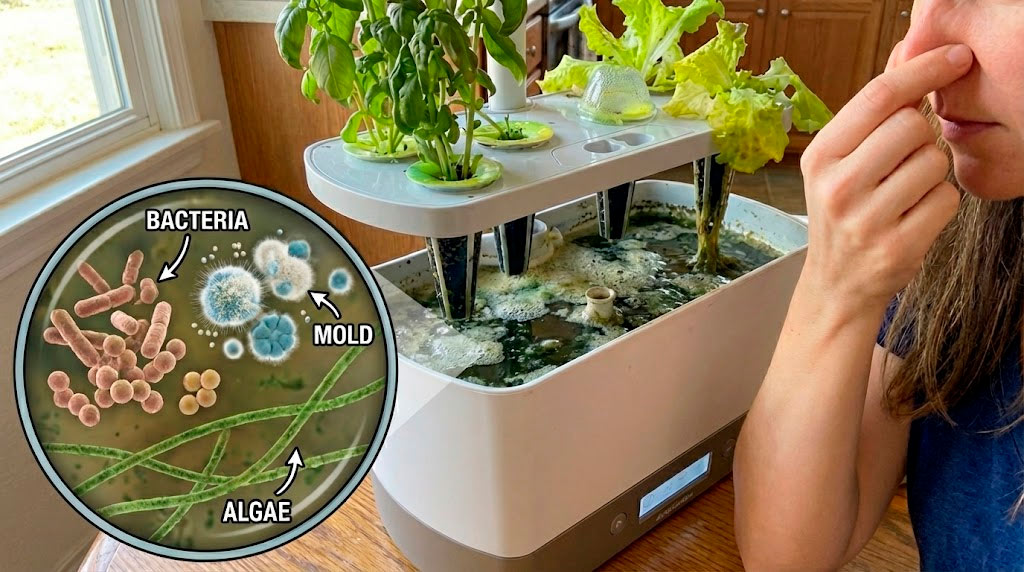
- Waste buildup: Over time, nutrient salts and old root debris settle at the bottom, creating an ideal environment for bacteria.
- Lack of oxygen (the most common cause): If the pump gets clogged or flow is weak, the water runs out of oxygen. This opens the door to anaerobic bacteria, the main cause of that rotten smell.
- High temperatures: Warm water loses its ability to retain oxygen, making root rot easier to develop.
- Light leaking in: If light reaches the tank, algae will grow. When it dies and decomposes, it consumes oxygen and generates bad odors.
- Diseased roots (Pythium): Brown, slimy roots that fall apart when touched are decomposing and will quickly contaminate the entire tank.
6 rules to prevent bad smells
To avoid reaching the point where you’re trying to rescue your plants, build these habits into your maintenance routine:
1. Refresh the nutrient solution regularly Don’t just top off the tank — old water accumulates imbalances. In normal weather, change the water every 30 days. In summer or humid climates, every 15.
2. Block out light completely Algae are the enemy of hydroponics. Make sure all pod covers are in place and covered with their labels. If the tank plastic is very translucent, cover it so no LED or sunlight gets through.
3. Keep the water cool Heat is the silent enemy. Place your system in the coolest spot in your home and avoid direct sunlight, especially in summer.
4. Take care of the water pump The pump is the heart of the system. If it makes strange noises or the flow looks weak, take it apart, clean the sponge filter (if it has one), and check that no roots are caught in the impeller.
5. Clean the reservoir at every water change When you change the water, take the opportunity to give the reservoir a quick rinse.
Tip: You can use a mild mix of water and a little white vinegar to disinfect and remove mineral or salt residue. Rinse thoroughly afterward.
6. Don’t overdo the nutrients More isn’t always better. Excess nutrients raise the EC and can burn the roots, leading to decomposition and bad odors. Always stick to the recommended doses.
S.O.S.: what to do if the water already smells bad
If you opened the tank and the smell is already there, don’t panic. Follow this emergency protocol:
- Full drain: Discard all the old water immediately.
- Deep clean: Wash the tank, pump, and lid with water and vinegar.
- Root inspection: Carefully remove the plants and examine the roots.
- Healthy: White or cream-colored, firm.
- Rotten: Brown, dark, slimy, or foul-smelling.
- Action: Use sterilized scissors to cut away all rotten sections until only healthy tissue remains.
- Restart: Fill with fresh water, adjust pH, and add nutrients at a slightly lower dose than normal to avoid stressing the plants while they recover.
- Monitor: Check the smell and plant condition over the next 2 to 3 days.
Conclusion
A healthy SmartGarden should smell clean and fresh. Bad odor is always a sign that the tank’s ecosystem needs attention. With regular water changes and by keeping the system cool and free from direct light, your plants will grow strong and trouble-free.