
In hydroponic growing, water is the vehicle of life. Unlike soil, which acts as a giant buffer, in hydroponics we are responsible for maintaining the system’s chemical balance.
Doing a complete nutrient solution change — a “flush” — is an essential practice for keeping your plants healthy. Over time, roots excrete organic waste, unused mineral salts build up, and the water’s balance shifts. Refreshing the water is like giving the system a clean reset, ensuring the roots can breathe and absorb nutrients without any blockages.
Note: This article includes AI-generated images and illustrations to enhance your reading experience.
How often should you do it?
The golden rule in home hydroponics is to do a full solution change once a month.
However, there are situations where it’s worth doing more frequently — every 2 to 3 weeks:
- High temperatures: In hot weather, water holds less oxygen and breaks down faster.
- Recent problems: If there’s been a fungal outbreak or pest issue, changing the water is part of the treatment.
- Fertilization mistakes: If there’s been accidental overfeeding, the only reliable way to reset the system is with fresh water.
Short-cycle vs. long-cycle crops
Frequency also depends on the type of plant:
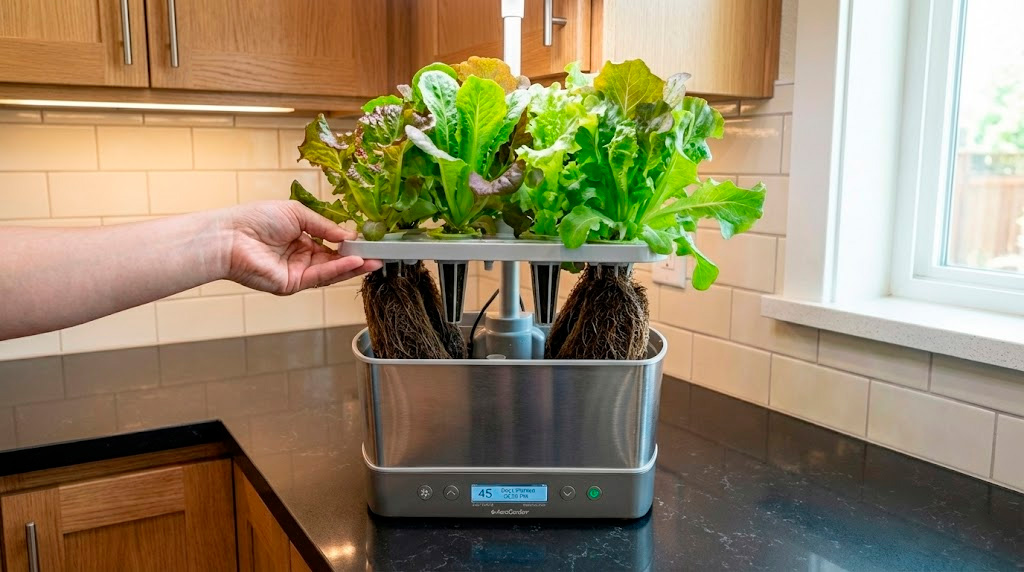
- Lettuce and leafy greens: They’re harvested quickly (30–45 days). Often, topping off the tank is enough to get through to harvest.
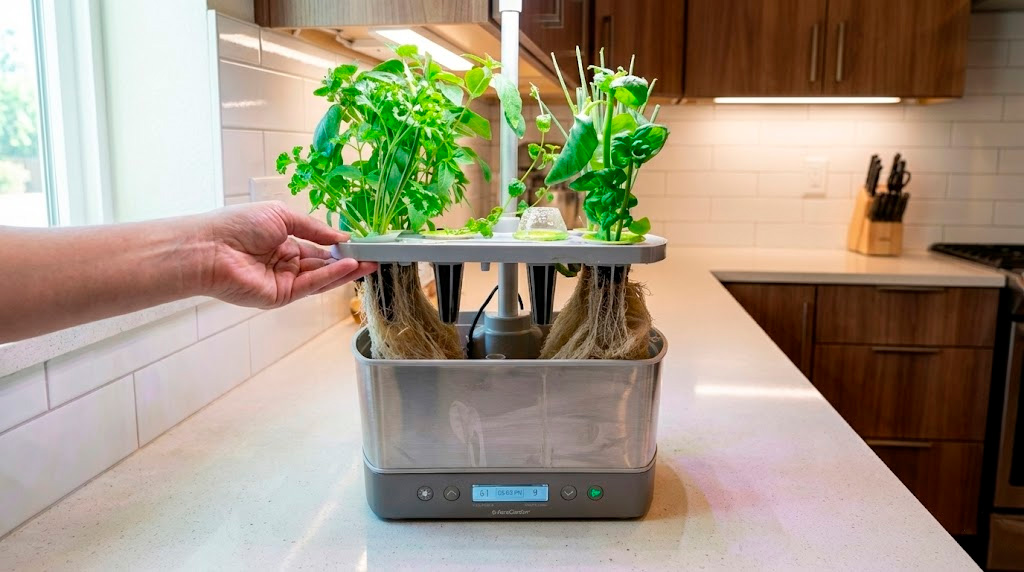
- Tomatoes, peppers, and fruiting plants: They live in the system for months. Salt buildup is inevitable and imbalances happen easily. In these cases, a monthly change is non-negotiable to ensure good flowering and fruit production.
Signs that the solution needs an immediate change
Sometimes, regardless of your schedule, the system will tell you it needs fresh water. If you notice any of these symptoms, don’t wait until the end of the month:
- Swamp or rotten egg smell: Healthy water should have a neutral or fresh earth smell. An unpleasant odor signals low oxygen and anaerobic bacteria.
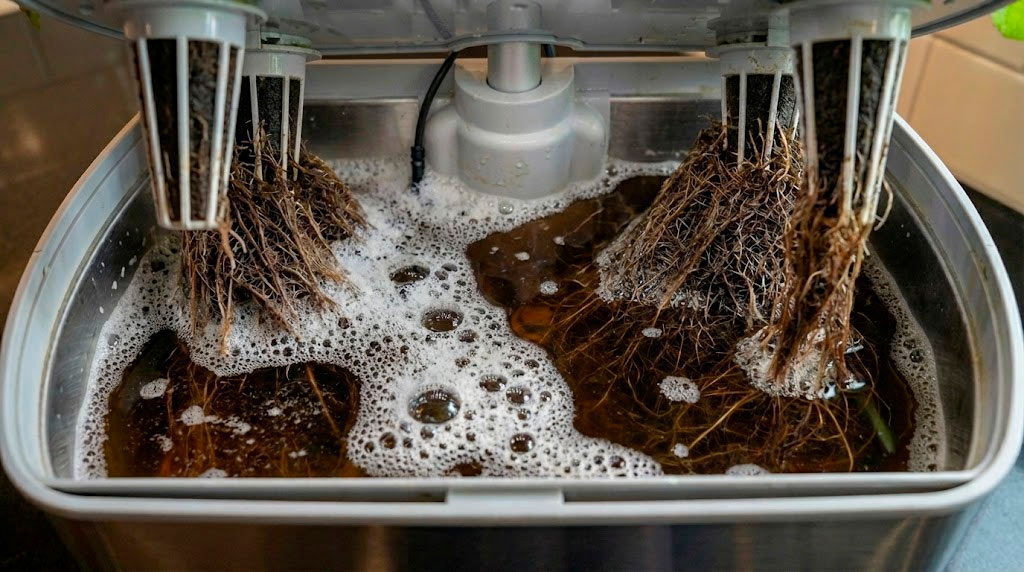
- Cloudy or persistently foamy water: The nutrient solution should be clear. If it’s turned milky or murky, there’s organic decomposition happening inside the tank.
- Uncontrollable pH: Small adjustments are normal, but if you correct the pH in the morning and by afternoon it’s swung drastically again, the water chemistry is no longer stable. Changing the water is the only real fix.
- Dark roots: They should be white. If you notice them turning brown, black, or slimy, root problems are beginning. Fresh, oxygenated water is the first step toward saving them.
- Burned leaf tips: If the tips suddenly turn yellow or dry, it’s usually a sign of salt toxicity from buildup.
How to change the solution without making a mess
The biggest obstacle is the logistics. Moving a heavy water-filled container is awkward and carries a real risk of spilling liquid all over the house.
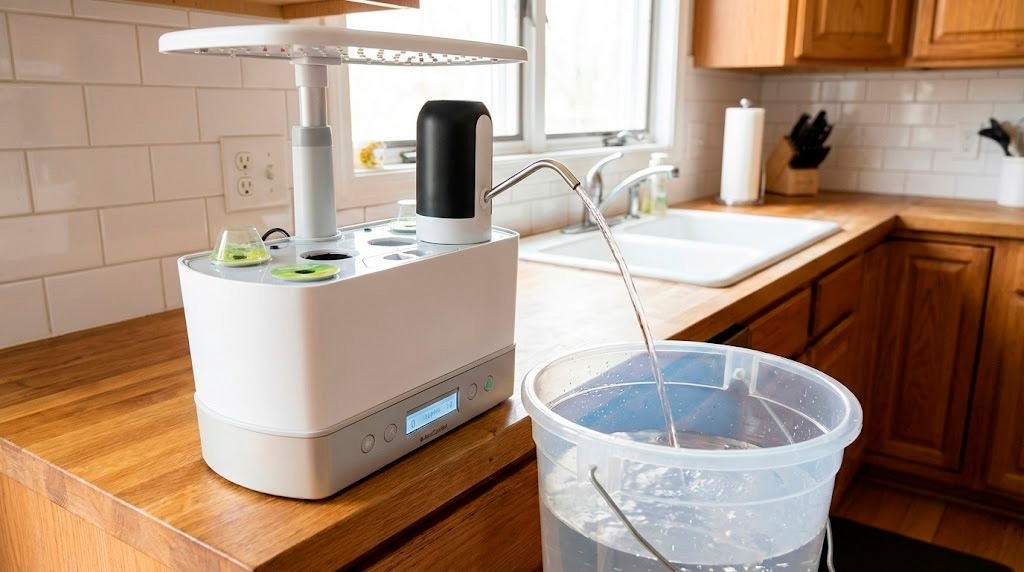
The solution: extraction pumps. These are inexpensive tools that turn a heavy chore into a 5-minute task. Two options work very well:
Option 1 — Manual siphon pump
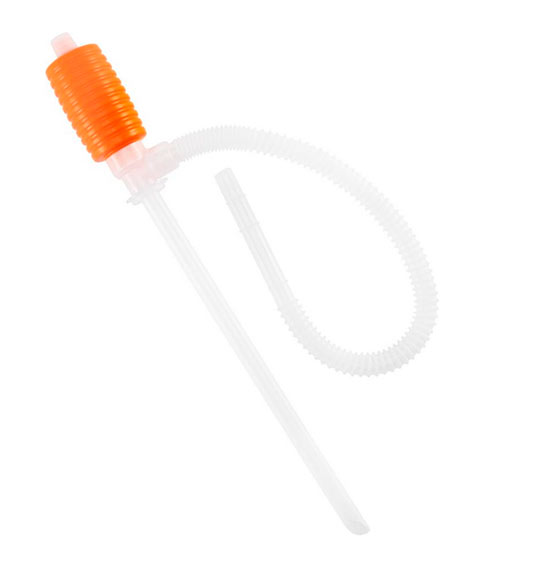
The classic pump originally used for transferring fuel in emergencies. You squeeze the top to create suction and the water flows by gravity. It’s extremely cheap and requires no electricity.

Siphon Hose for Water & Gasoline Fuel Transfer
Option 2 — Automatic dispenser pump
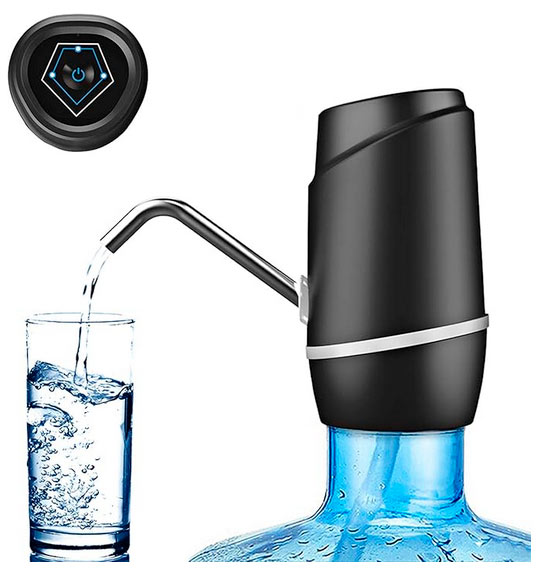
Originally designed for office water cooler jugs, these adapt perfectly to hydroponics. They’re USB rechargeable: press a button and the pump draws water from the tank into your bucket. Zero physical effort required.
Rechargeable electric pump ideal for quickly and effortlessly draining hydroponic systems
Step by step
It’s not just a matter of draining and refilling. To keep your plants from experiencing stress, follow this process:
1. Measure before you drain Record the EC and pH of the old solution (as long as the plants look healthy). That’s the level they’re used to — when mixing the new solution, your goal is to get close to those same values so the transition is gentle.
2. Drain and clean Use the pump to empty the tank.
- Tip: Don’t pour that water down the drain. It’s full of nutrients — use it to water soil plants, balcony pots, or your garden.
3. Refill: adjust for your plant’s current stage
- Fill with fresh water, ideally at room temperature.
- Add nutrients based on the plant’s current growth stage. A mature or flowering plant needs a very different dose than a seedling.
- Add nutrients targeting the EC level you recorded in step 1.
- Finally, adjust pH to the correct range for your crop.
With the right tools and by learning to read your plants’ signals, keeping your SmartGarden in top shape stops being a chore.