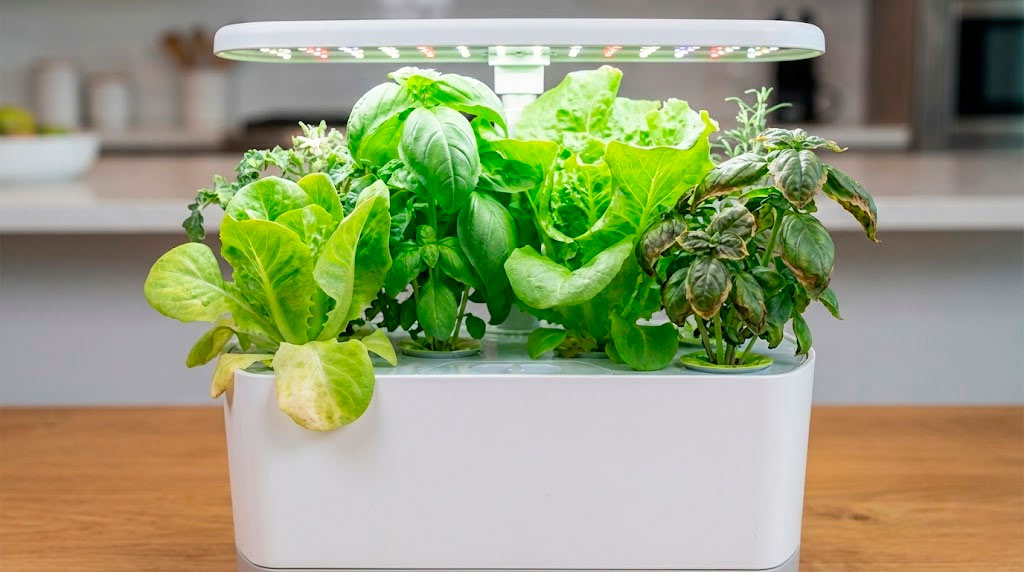
In a SmartGarden, everything happens faster. Unlike soil growing, where the ground acts as a buffer that forgives certain mistakes, in hydroponics the roots are in direct contact with the nutrient solution. If something is missing or out of balance, your plants will let you know right away.
Maintaining chemical balance is the master key to success. But how do you tell whether your plant is hungry (deficiency) or being poisoned (excess)?
In this guide you’ll learn to read your plants’ signals, understand the causes behind those spots on the leaves, and most importantly, how to fix them step by step.
Note: This article includes AI-generated images and illustrations to enhance your reading experience.
Why do these problems occur in compact systems?
SmartGardens work with small water volumes — sometimes as little as half a gallon to one gallon — which makes stability harder to maintain:
- Concentrating evaporation: When water evaporates or the plant drinks it, the level drops but the salts (nutrients) stay behind. Fertilizer concentration rises quickly and can cause burns.
- Fluctuating pH: If pH swings too high or too low, it acts like a chemical lock. Even if nutrients are in the water, the plant can’t absorb them.
- Eyeballing doses: Adding “a little extra fertilizer just in case” is usually the number one cause of problems.
- Old solution: Over the weeks, salts the plant doesn’t use build up, creating a toxic environment.
Golden rule: The problem isn’t always how much nutrient you added — it’s how the water chemistry shifts over time.
Too little or too much? How to identify the symptoms
Signs of deficiency
The plant looks weak and loses color:
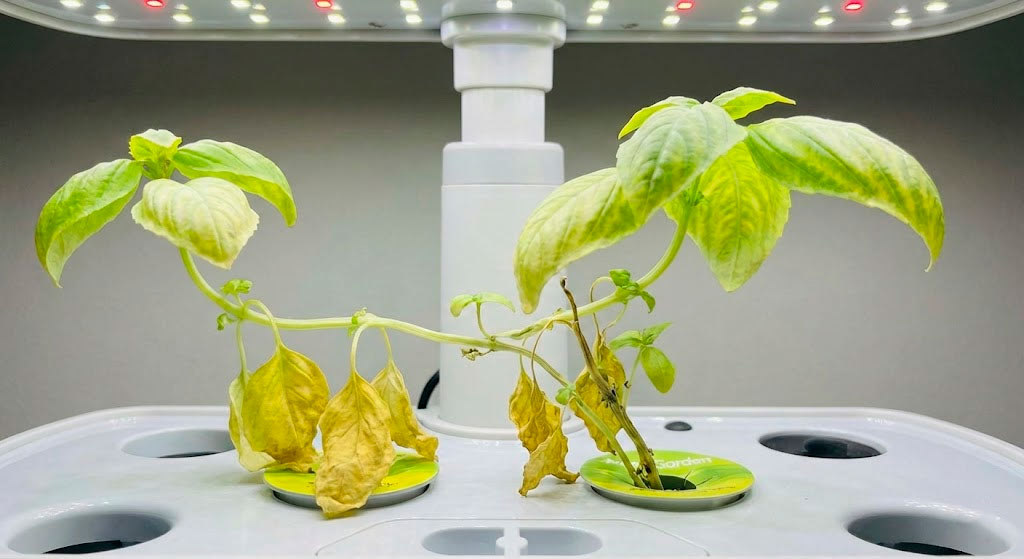
The plant looks weak and loses color:
- Lower leaves turning yellow — the plant “cannibalizes” its old leaves to feed the new ones (classic nitrogen deficiency)
- General yellowing or striping between leaf veins (chlorosis)
- Slow or stalled growth
- Thin stems and a fragile appearance
Signs of excess (nutrient burn)
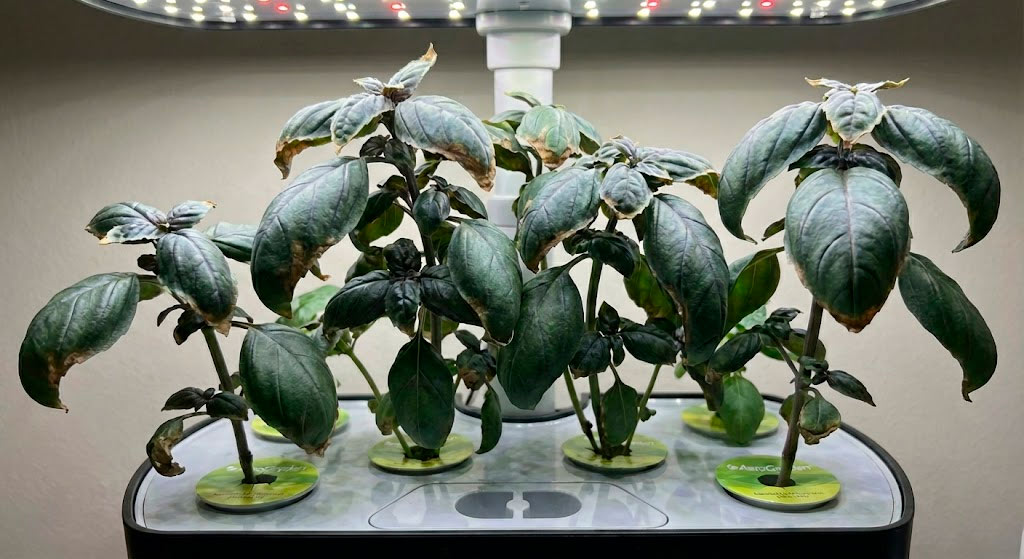
The plant looks saturated, dark, and stiff:
- Burned tips — leaf edges turn brown and dry
- Clawing leaves — they curl downward or roll inward
- Very dark green, almost bluish or unnatural color
- Leaves that feel rigid and stiff to the touch
Case studies: real-world diagnosis
The yellowing lettuce
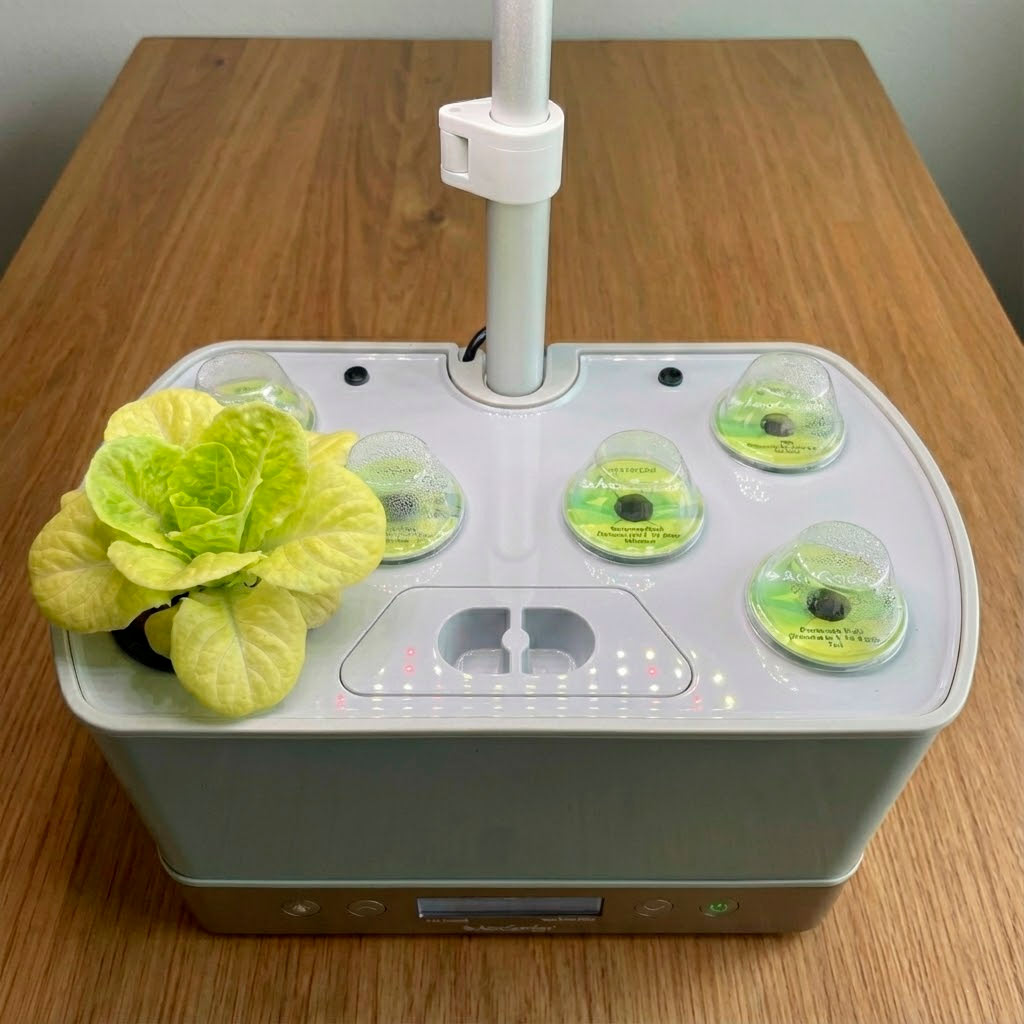
The lower leaves turn yellow while the center stays light green. This is a nitrogen deficiency or pH lockout — the plant is moving its reserves toward new growth. The fix: measure pH (adjust to 6.0) and refresh the nutrient solution at the standard dose.
2. The basil with “burned edges”
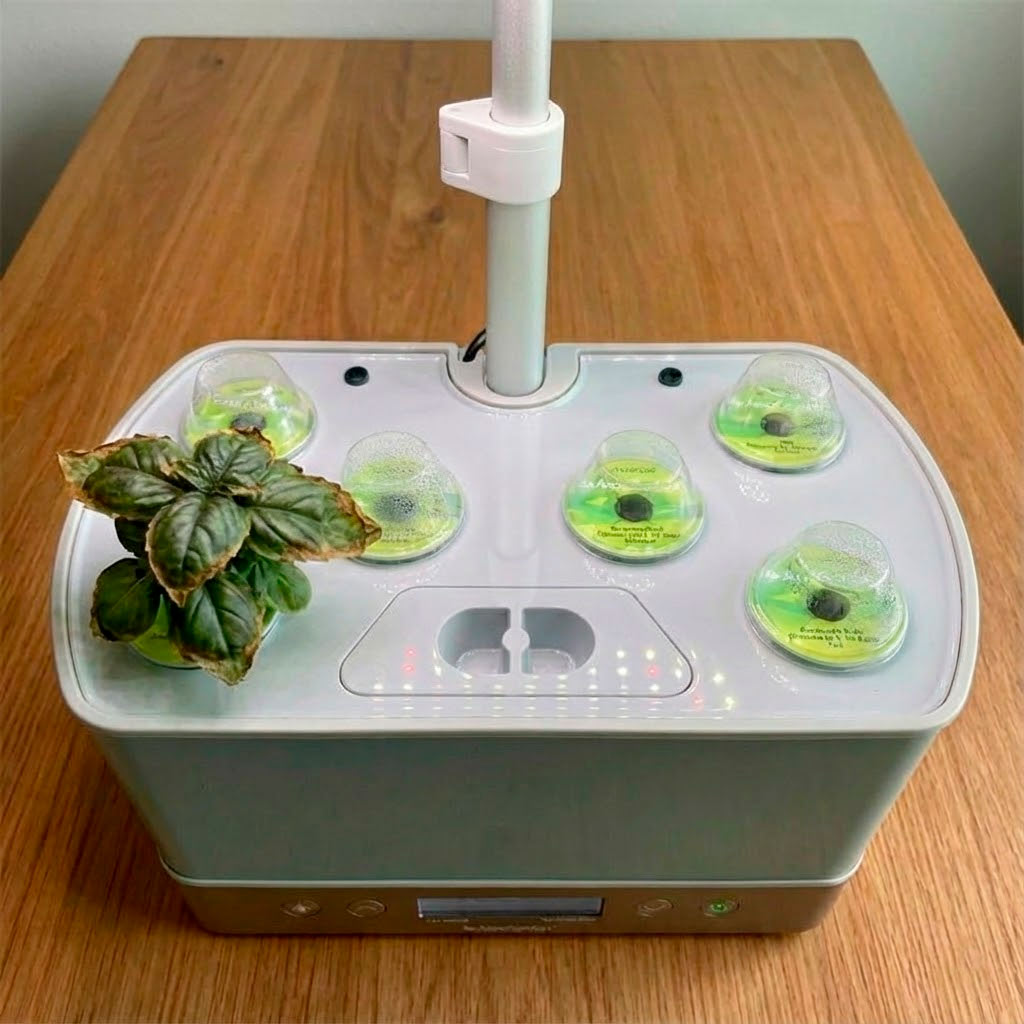
The leaf tips dry out and turn brown. This is nutrient burn — salt concentration (EC) climbed too high, probably because the water level dropped and was topped off without adjusting, or the plant was overfed. The fix: drain the tank, rinse the reservoir, and mix a new solution at 20% less fertilizer than usual.
3. The “stunted” cherry tomato
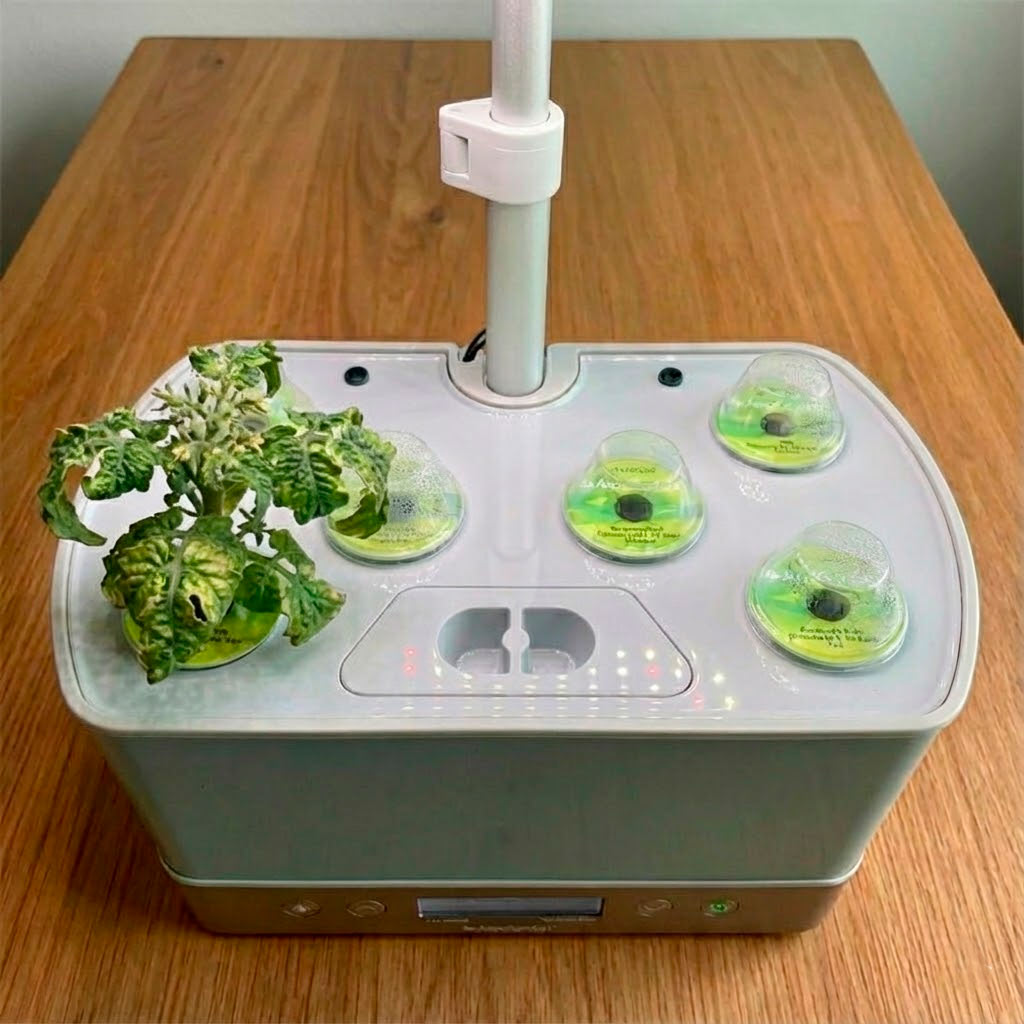
Small plant, misshapen or curled leaves, growth at a standstill. This is pH stress or a lack of micronutrients like calcium or magnesium. Tomatoes are heavy feeders and suffer from imbalances faster than most. The fix: replace the entire solution and increase the dose slightly (10–15%) if pH is correct. In some cases the plant won’t recover and it’s best to start fresh from seed.
Step-by-step diagnosis protocol
Before adding any fertilizer to the tank, follow this order:
- General observation: Does it affect older leaves (bottom) or new growth (top)? This tells you what type of nutrient is failing.
- Water history: How long has it been since you did a full water change? If it’s been more than 3 weeks, look no further — change the water.
- pH measurement: The most frequent culprit behind deficiencies.
- Ideal: 5.8 to 6.2
- Too high: locks out iron and phosphorus
- Too low: locks out calcium and magnesium
- Root and temperature check: Are the roots white? If they’re brown or smell bad, you have a root disease problem (Pythium), not a nutrient problem. Water temperature should stay between 64°F and 72°F.
- EC measurement: If you have an electrical conductivity meter:
- Low EC + pale plant = not enough food
- High EC + burned tips = too much food
How to fix the problems
If it’s a deficiency Easier to fix than excess, but it requires patience:
- Adjust pH first — sometimes the nutrients are there but the pH is preventing the plant from taking them in.
- If you confirm there’s not enough food (or EC is low), add nutrients gradually.
- When in doubt, drain the tank and mix a fresh solution at the recommended dose.
- Old yellow leaves won’t turn green again, but new growth should come in healthy within 3 to 4 days.
If it’s an excess Act fast — excess burns the roots:
- Emergency drain: Discard all the old solution immediately.
- Flushing: If possible, run plain water (pH-adjusted) through the system for a few hours to wash the salts off the roots.
- Mix a new solution at 50–70% of the usual dose.
- Plan B: If the plant doesn’t bounce back within 5 days, transplanting it to a soil pot may be the last resort — soil is much more forgiving on damaged roots.
How to prevent disasters going forward
- Top off with water only: Between solution changes, when the level drops, refill with plain water (pH-adjusted). Don’t add nutrients every time you top off — that spikes salt concentration.
- Full tank refresh: Change 100% of the water every 2 to 3 weeks. It’s the system’s “reset.”
- Use an EC meter: A small investment that gives you full control.
- Grow log: Write down when you changed the water and how much fertilizer you used. It helps you avoid repeating mistakes.
Seeing a yellow leaf isn’t the end of the world — it’s your plant communicating with you. With observation and gentle adjustments, you’ll master the art of the nutrient solution and enjoy bumper harvests right in your own kitchen.