
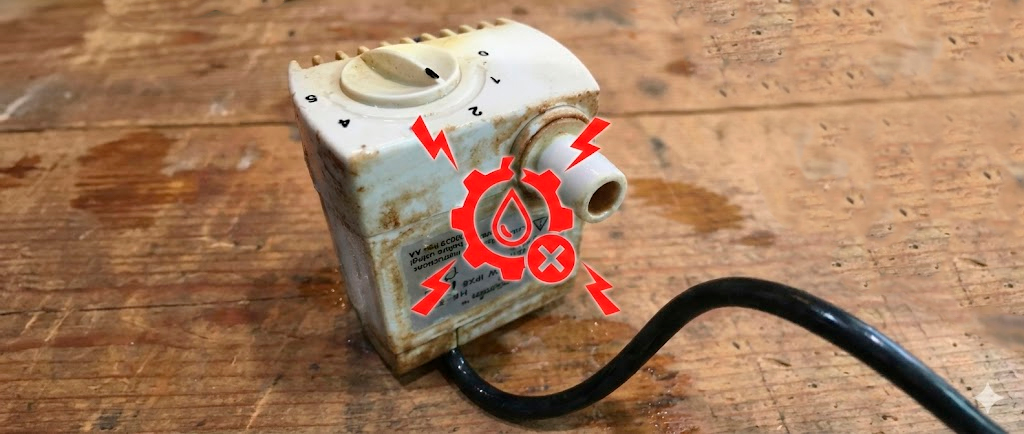
It’s every hydroponic grower’s nightmare: you walk up to your SmartGarden and notice complete silence. The gentle hum of circulating water is gone.
When the pump stops moving the nutrient solution, the clock starts ticking. Without oxygen and nutrients circulating, the roots can suffer. There is good news, though: 90% of the time the pump isn’t broken — it’s just clogged or on a rest cycle.
Let’s go step by step to revive your system or, in the worst case, keep your plants alive while you wait for a replacement.
Note: This article includes AI-generated images and illustrations to enhance your reading experience.
Step 1: Is it actually broken, or just resting?
Before you take everything apart, keep in mind that most SmartGardens operate on irrigation cycles — many pumps run for 30 minutes and rest for 30, for example. If you check it during the rest period, it’ll look dead.
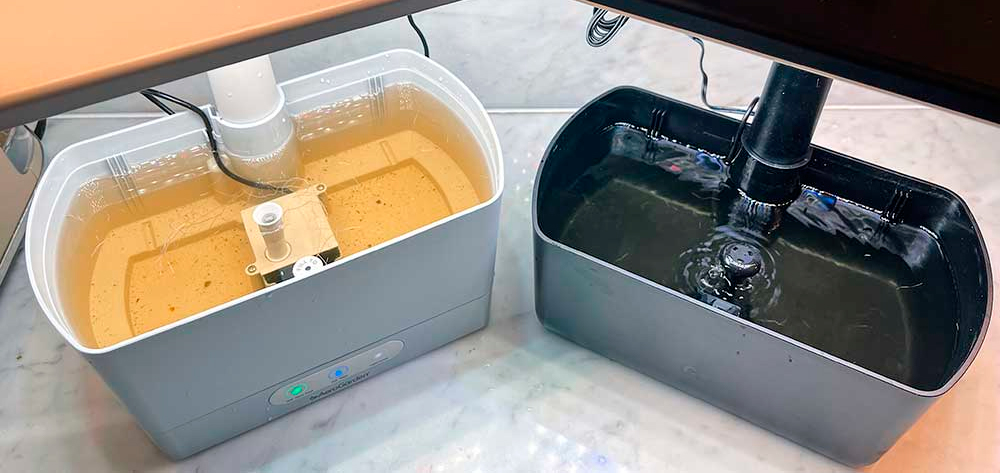
The quick test:
- Carefully lift the platform where the plants sit.
- Find the central tube where the water should be flowing out.
- Unplug and plug the unit back in.
- On restart, almost all models activate the pump immediately. If water comes out or you hear the motor kick on, it was just on a rest cycle.
Step 2: the 3 most common causes
If you ran the test and no water comes out, check these three suspects before buying anything.
A. Invasive roots In compact systems, roots grow aggressively in search of water flow. It’s very common for a mass of roots to have wrapped around the pump intake or worked their way inside the housing.
Fix: Remove the pump cover (it usually has a small plastic screen) and use tweezers to pull out any root debris or buildup blocking the impeller.
B. Dirty electrical contacts Many models don’t have direct wiring to the pump — instead they use metal contact points at the base of the tank. Humidity and fertilizer salts cause these contacts to oxidize or get coated with residue.
Fix: Check the metal contact points (both on the light arm and on the bowl). Clean them with an alcohol-dipped cotton swab or gently sand them to remove oxidation.
C. Mechanical disconnection Sometimes the motor runs (you can hear a hum) but no water comes out. The most common cause is that the tube connecting the pump to the watering tray came loose or wasn’t seated properly after the last cleaning.
Fix: Press the connections firmly into place and make sure the rubber seal is properly seated.
Step 3: emergency plan to save the crop
If you’ve tried everything above and the pump still won’t respond, the motor has likely reached the end of its lifespan (between 1 and 4 years on average). While you wait for a replacement, you have two options to keep your plants alive:
Option A — External oxygenation (the best option)
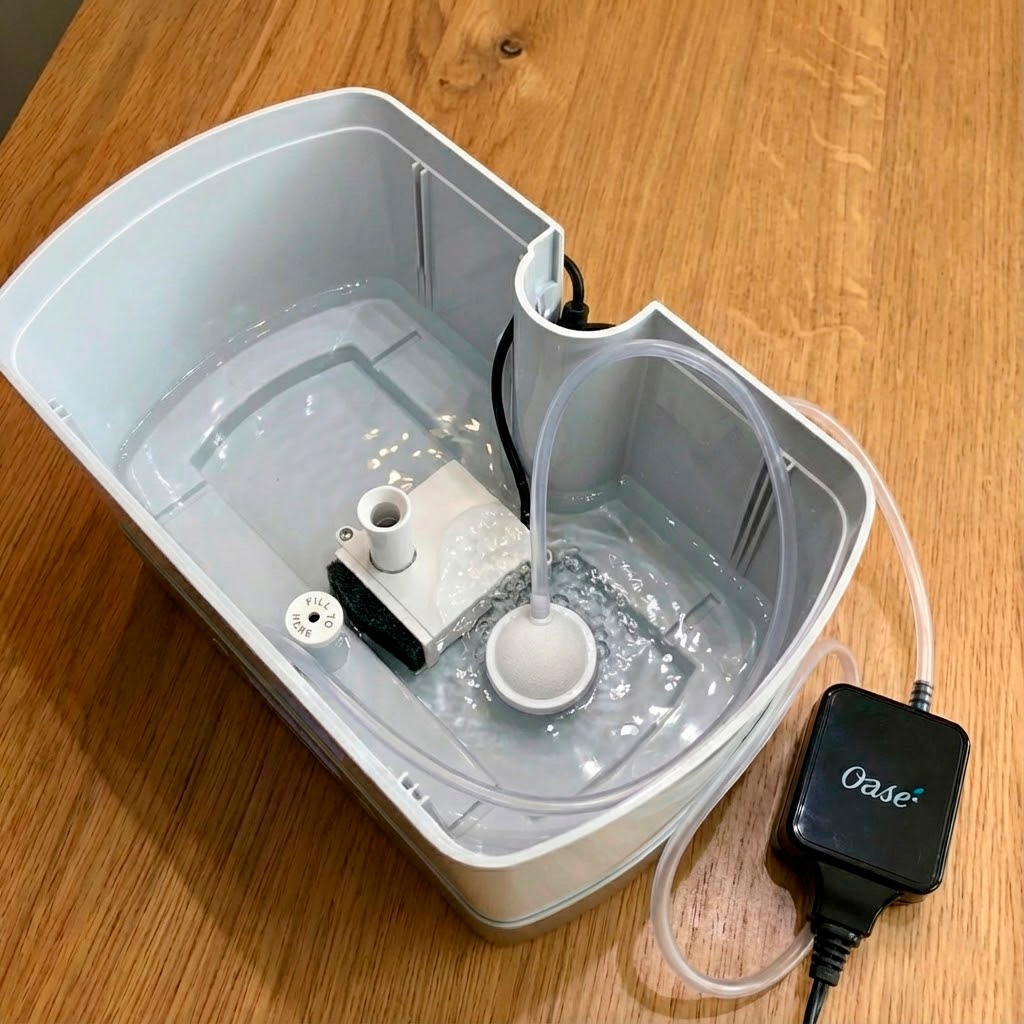
The main problem when the pump dies isn’t the water — it’s the lack of oxygen. You can set up an external air pump (aquarium aerator) with a diffuser stone inside the tank. This keeps the solution oxygenated and moving.
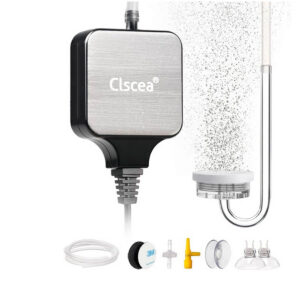
Small Air Pump Aerator for 1-15 G Super Quiet 1.5 Watts, Complete kit
Option B — Kratky method (passive)
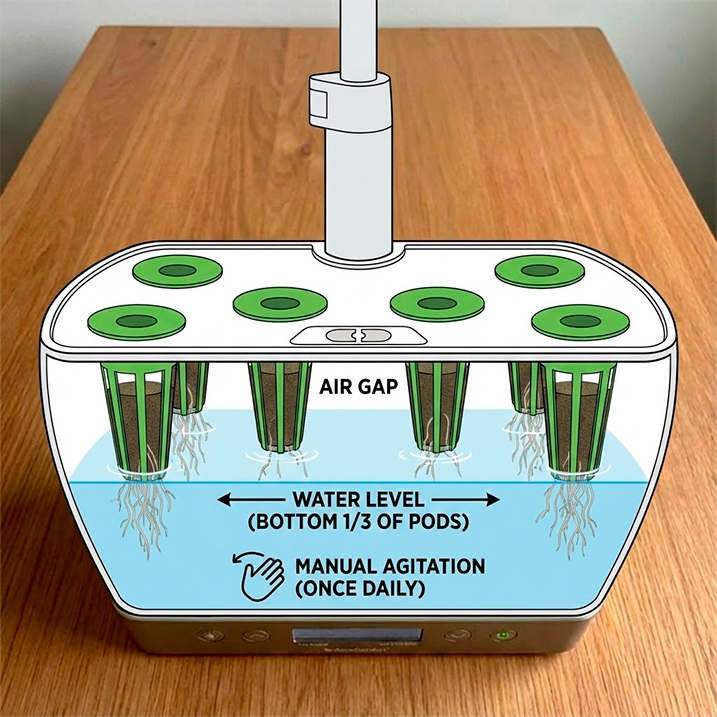
If you don’t have an aerator, convert your active system into a passive one:
- Fill the tank until the water reaches only the bottom third of the pods.
- Leave an air gap between the water level and the base of the plant — the upper roots will draw oxygen from the moist air while the lower roots take up water.
- Manually stir the water once a day to keep it from going stagnant.
Step 4: the replacement
Once the pump is confirmed dead, you have two paths:
Original replacement part: The safest option, though not all brands or models offer this.
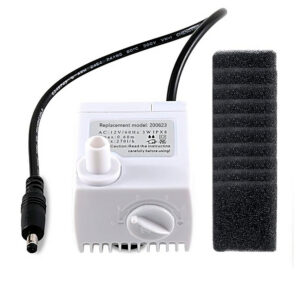
Aero-Garden Pump with 10 Filters, Ultra Quiet Hydroponics Growing System
Generic pump: Any small submersible pump (2 to 5 W) from an aquarium or hardware store will work; they are much more affordable and easier to find. However, keep in mind that this is a functional solution rather than an aesthetic one.
Depending on the specific pump, you will likely need to add an attachment or elbow joint so the outlet flow points downward; otherwise, the water will constantly hit the lid. Additionally, the setup requires some creative cable management: the power cord must be routed so the lid can still close properly—using an empty pod hole is a great workaround for this.
Finally, to keep the system running smoothly, it shouldn’t operate 24/7. You’ll need to connect it to a timer, ideally set to a cycle of 30 minutes on and 30 minutes off. In short, it’s a fairly “custom” configuration, but it’s a perfect way to keep your Smart Garden in action.
Preventive maintenance: so it doesn’t happen again
- Monthly cleaning: Rinse the tank and remove organic debris every 4 weeks.
- Root pruning: Don’t hesitate to trim roots that are getting dangerously close to the pump.
- Dry contacts: When you clean the unit, thoroughly dry the electrical connectors before reassembling.
A stopped pump isn’t a death sentence for your crop. With a little contact cleaning or a workaround using an external aerator, your plants will barely notice the difference while you sort out the underlying issue.