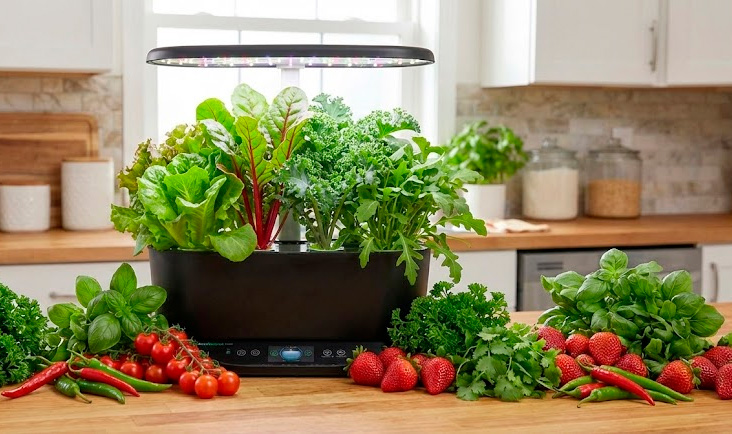
Home hydroponics has opened a portal right in our kitchens. Suddenly, the idea of harvesting a salad in your living room or having fresh basil in the middle of winter is no longer science fiction.
But here’s the reality check: not every plant is built to live in a hydroponic kit.
Choosing the right variety is 80% of the battle. If you try to grow a watermelon in an AeroGarden, you will fail. But if you choose varieties that are genetically suited for small spaces, you’ll have an endless food-producing machine.
In this guide we explore which species thrive in these environments — organized by difficulty — and which ones are best avoided.
Note: This article includes AI-generated images and illustrations to enhance your reading experience.
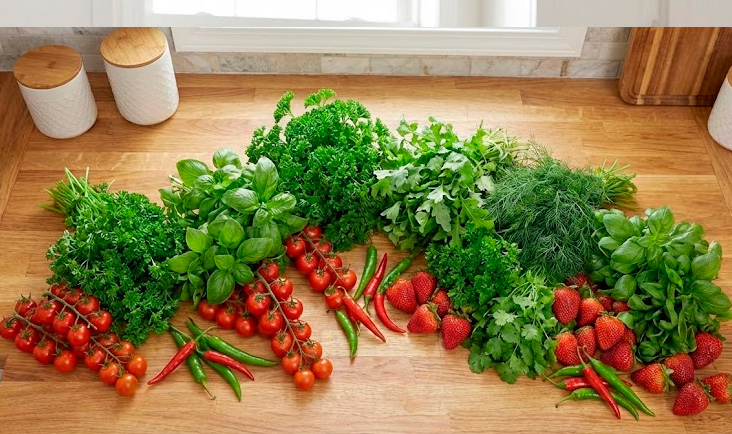
The compatibility checklist: what makes a plant a good fit?
Before buying seeds, think like an engineer: is this plant compatible with my system?
Home kits (like LetPot, Ahopegarden, or AeroGarden) have clear physical limitations. For a plant to be a candidate, it must meet what we call the indoor growing trinity:
- Compact form factor: The vertical space between the base and the LED lights is usually limited (12 to 24 inches at most). You need dwarf or bushy plants, not vines.
- Well-behaved roots: In hydroponics, roots grow explosively. A plant with overly aggressive roots — like uncontrolled mint — can clog the pump, block the sensors, and suffocate neighboring plants.
- Fast turnaround: We want efficiency. Plants with very long growing cycles take up valuable pod space for too long.
Level 1: Leafy greens (the “plug & play” mode)
If this is your first time turning on the machine, start here. Leafy greens are forgiving, require low nutrient levels (low EC), and grow under almost any type of light.
| Variety | Time to Harvest | Difficulty | Chef’s Notes |
|---|---|---|---|
| Lettuce | 20–30 days | ⭐⭐⭐ Very Easy | The undisputed queen. Look for loose-leaf varieties so you can keep cutting and let them regrow. Avoid head-forming types (like Iceberg) — they take much longer. |
| Swiss Chard | 30–35 days | ⭐⭐ Easy | Go for “baby” or colorful varieties. They’re gorgeous and very productive. Cut the outer leaves and let the center keep growing. |
| Kale | 35–40 days | ⭐⭐ Easy | A nutrient powerhouse. Watch out: it grows a lot. You’ll need to prune it regularly so it doesn’t touch the lights and burn. |
| Arugula | 20–25 days | ⭐⭐⭐ Very Easy | Explosive growth and much more intense flavor than store-bought. Harvest it young — if it gets too old, it turns bitter. |
| Spinach | 30–40 days | ⭐ Medium | Fair warning: spinach is finicky. It hates heat. If your lights run hot or your home stays above 75 °F, it will bolt prematurely. |
Pro tip: For lettuce and greens in general, use the Cut & Come Again technique: cut only 30% of the outer leaves at a time. The plant will regenerate and you’ll be able to harvest from the same one for 2 to 3 months.
Level 2: Aromatic herbs — the gold standard
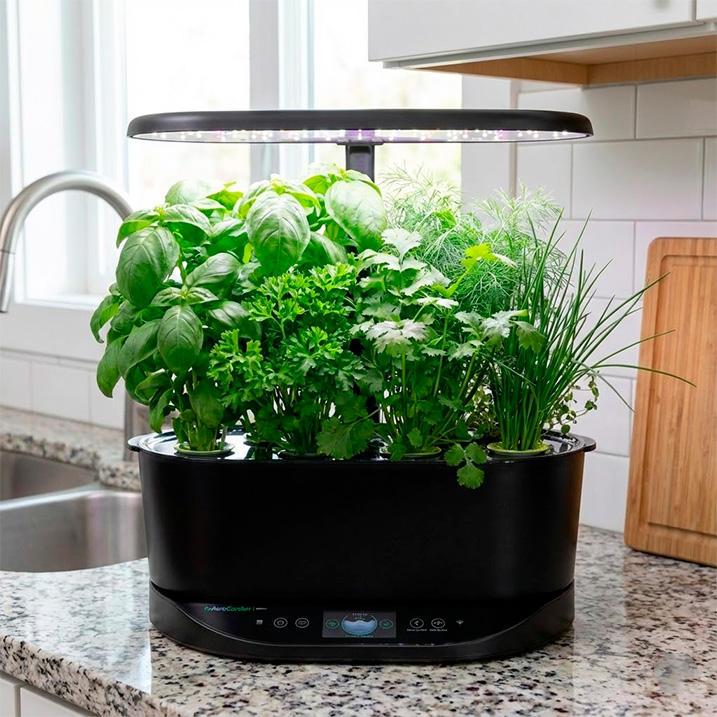
This is where hydroponics really shines. Herbs grown in water have more concentrated essential oils, which translates to more flavor. They’re ideal for long-term growing.
- Basil (Genovese, Thai, lemon): The number one crop, hands down. It grows so fast you’ll need to prune it weekly. Its roots are invasive — check the tank regularly and trim them if they start crowding out neighboring plants.
- Parsley and cilantro: Both work very well, but they’re single-cycle plants. Once you cut them back heavily, they’re slow to recover. Cilantro tends to bolt (flower) quickly in the heat, just like spinach.
- Dill and chives: They grow vertically and neatly, perfect for the back slots of the kit.
The mint rule: Never plant mint in the same reservoir as other plants unless you’re watching it closely. Its roots spread like a net and strangle everything they touch. If you want mint, dedicate an entire system to it or grow it alone.
Level 3: Fruiting plants — expert mode
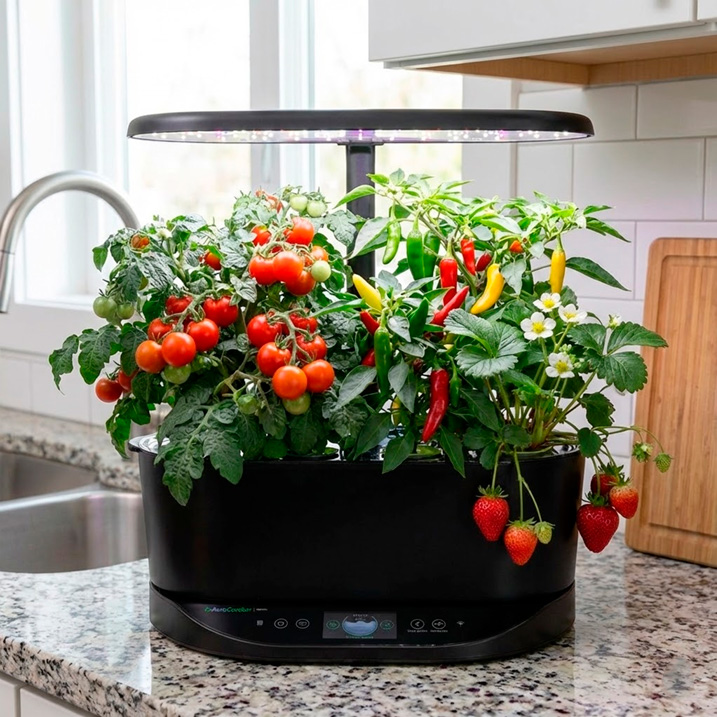
Want tomatoes in winter? It’s doable, but it means pushing your system harder. Fruiting plants drink more water, consume more nutrients, and need more light.
The key: variety selection. You can’t plant a conventional garden tomato. You need seeds bred for small spaces. Look for these terms on the packet:
- Micro-Dwarf
- Patio Variety
- Determinate
| Plant | Recommended Variety | The Hidden Challenge |
|---|---|---|
| Cherry Tomato | Tiny Tim, Red Robin, Micro Tom | Manual pollination. There are no bees indoors: you’ll need to gently shake the flowers or use an electric pollinator to transfer the pollen. |
| Peppers (Chiles) | Thai Dragon, Mini Bell | They’re slow. It can take 3 months to get the first fruit. Requires patience and plenty of light. |
| Strawberries | Albion, San Andreas | Tricky. Prone to crown rot if they get too wet. Require well-controlled pH. |
The blacklist: what NOT to grow
To save yourself some frustration, avoid these in compact systems:
- Root vegetables (carrots, potatoes, onions, sweet potatoes): The edible part grows underground. In hydroponics there’s no soil, just water and plastic — they have nowhere to develop.
- Large cucurbits (squash, melon, watermelon, large cucumbers): These are massive plants. A single squash plant can take over your kitchen in two weeks. Specialty mini cucumbers exist, but they require trellising and extra space.
- Corn: Requires too much space, height, and wind pollination. Not feasible in a kitchen kit.
Planning strategy: “zoning”
A very common mistake is planting everything together without thinking it through. For best results, design your garden intentionally:
- Don’t mix nutrient levels: A tomato (which needs high EC) next to a lettuce (which needs low EC) is a recipe for trouble. You’ll either burn the lettuce or starve the tomato. Stick to single-species setups per system.
- Height matters: Plant taller varieties (basil, dill) in the back pods and shorter ones (lettuce, thyme) up front. That way all plants receive equal light.
- Leave empty slots: If your system has 12 pods, don’t fill them all. Plants grow and get in each other’s way. Use 6 or 8 to allow good airflow and prevent fungal issues.
Conclusion
Your hydroponic system is only as versatile as the seeds you choose. Start by securing a quick win with lettuce and basil. Once you’ve got pH and pruning down, take on the challenge of micro-dwarf tomatoes.
Hydroponics isn’t about forcing nature — it’s about choosing the right players for the game.